Embarking on a strength training journey can be transformative, but knowing where to start can often be the biggest hurdle. “What You Need to Start Strength Training” is a comprehensive guide that equips you with all the essentials for a successful and safe foray into the world of strength building.
From conducting an initial fitness assessment to understand your baseline, to selecting the right equipment like adjustable dumbbells and weight benches, this article covers it all.
We dive into creating a personalized workout plan, the importance of appropriate clothing and footwear, and the crucial role of safety equipment. Nutrition and recovery tools are also key components we explore, ensuring your body gets the fuel and rest it needs.
Plus, we emphasize the value of educational resources for technique and safety, and the significance of progress tracking and motivation. This article is your all-in-one resource to confidently start your strength training journey.
- Fitness Assessment
- Workout Plan
- Weights and Equipment
- Appropriate Clothing and Footwear
- Safety Equipment
- Nutrition
- Recovery Tools
- Educational Resources
- Progress Tracking
- Motivation and Support
- Conclusion
Fitness Assessment
Before starting a strength training program, a comprehensive fitness assessment is crucial. This assessment should encompass several key areas:
Strength Assessment
Begin by testing your baseline strength. This can include exercises like the maximum number of push-ups or squats you can do, or how much weight you can lift in exercises like the bench press or deadlift for one repetition (known as your one-rep max, or 1RM). Increasing your strength is one of the biggest benefits of strength training, but this means knowing what you starting point is.
Flexibility Measurement
Flexibility is a crucial component of fitness that impacts your ability to perform exercises correctly and reduces the risk of injury. Tests like the sit-and-reach test can provide a good indication of your lower back and hamstring flexibility. Regular stretching should be part of your routine to improve flexibility over time. Find out why stretching is so valuable for strength training!
Cardiovascular Fitness
Cardiovascular endurance can be evaluated through tests like the Cooper run (running as far as possible in 12 minutes), or simpler tests like measuring how long it takes for your heart rate to return to normal after a brisk walk or jog.
Body Composition Analysis
Understanding your body composition, including body fat percentage and muscle mass, can provide insights into your overall health and help tailor your training program. This can be measured through various methods like bioelectrical impedance scales or skinfold measurements.
Posture and Alignment Check
Often overlooked, assessing posture and alignment can prevent imbalances and injuries. Consulting a fitness professional to analyze your posture, especially during exercises, is beneficial.
Goal Setting
Based on your assessment, set realistic and specific goals. These goals will guide your training regimen and provide motivation. Find out how to set realistic strength training goals right here!
Workout Plan
Creating a structured workout plan is essential in achieving your strength training goals. Here’s how to build an effective plan:
Define Your Goals
Are you aiming to build muscle, increase strength, lose fat, or improve endurance? Your goals will dictate the structure of your workout plan.
Choose Your Exercises
Select exercises that target all the major muscle groups. Include a mix of compound movements (like squats, deadlifts, and bench presses) that work multiple muscle groups and isolation exercises (like bicep curls and triceps extensions) for specific muscles. Try using a kettlebell!
Plan Your Routine
Decide how many days per week you can realistically work out. A typical strength training program might include 3-4 days per week. Ensure you’re allowing each muscle group adequate rest between workouts. Find out how to recovery in between workouts.
Volume and Intensity
Volume (sets and reps) and intensity (weight) should align with your goals. For strength, fewer reps with heavier weights are typical, while muscle growth might require more reps with moderate weights.
Progression
Plan to gradually increase your weights, reps, or sets over time to challenge your muscles and prevent plateaus. Take it slow and make sure that you’re always safe when strength training!
Incorporate Variety
Vary your exercises, sets, reps, and intensity to keep your muscles challenged and prevent boredom.
Monitor and Adjust
Regularly assess your progress and adjust your plan as needed. This might mean increasing weights, changing exercises, or adjusting your workout frequency.
Weights and Equipment
The right equipment is vital for an effective strength training routine. Here’s how to utilize various equipment:
Dumbbells
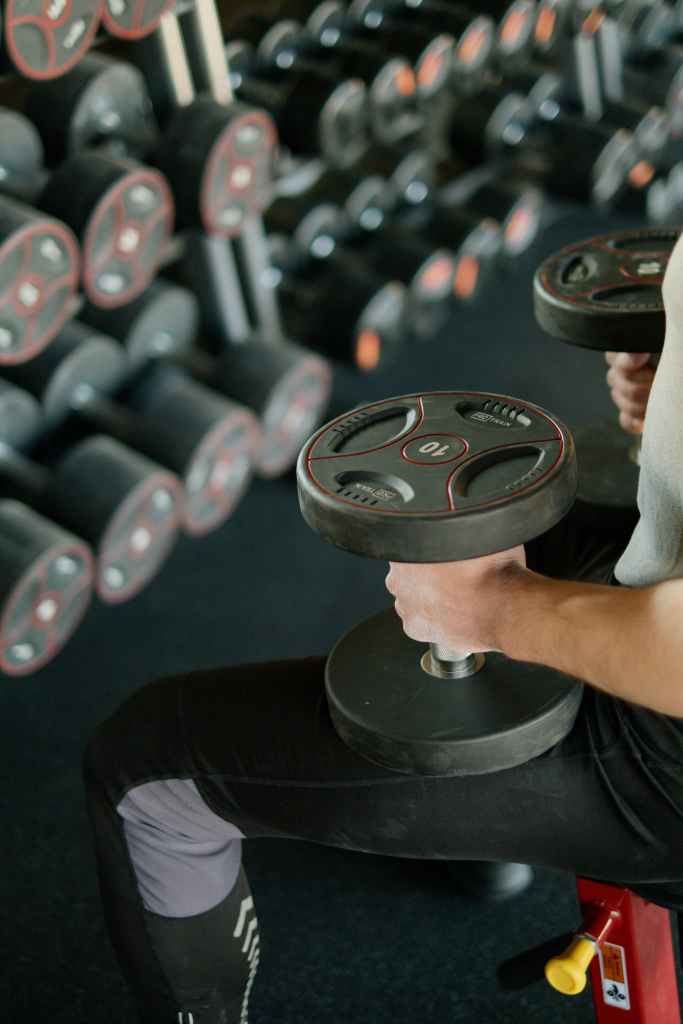
Adjustable dumbbells are versatile and space-saving. They’re great for exercises targeting both the upper and lower body, and they allow for unilateral training, which helps address imbalances between sides.
Barbell and Weight Plates
A barbell is essential for heavy compound lifts like squats, deadlifts, and bench presses. Start with a manageable weight and progressively increase as you build strength. Olympic weight plates are preferred for their durability and standardization.
Kettlebells
These are excellent for dynamic, explosive exercises like kettlebell swings, snatches, and goblet squats. They engage multiple muscle groups and improve coordination and balance.
Resistance Bands
Useful for warm-up, activation exercises, and adding resistance to bodyweight exercises. They’re also great for mobility work and rehabilitating injuries.
Weight Bench
A sturdy bench is crucial for exercises like bench presses, dumbbell rows, and flyes. Adjustable benches offer greater versatility for incline and decline exercises.
Squat Rack
A squat rack is important for safely performing heavy squats and presses. Look for one with adjustable safety bars.
Pull-Up Bar
Pull-ups are key for upper body strength, targeting the back, shoulders, and arms. If you can’t do a pull-up yet, use resistance bands or a chair for assistance.
Gym Mat
Essential for floor exercises, core work, and stretching. A good mat cushions your body and provides a non-slip surface.
Investing in quality equipment and learning to use it effectively will significantly enhance your strength training experience and results.
Appropriate Clothing and Footwear
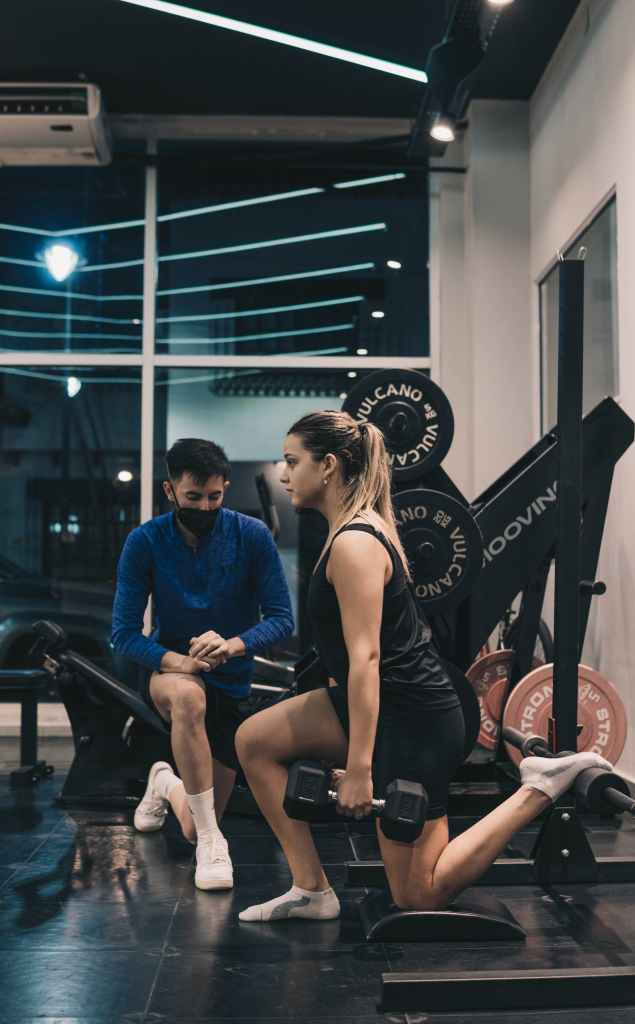
You need to have the right clothes and footwear for strength training!
Clothing
When it comes to strength training, the right clothing can make a significant difference. Your workout clothes should be comfortable, allowing for a full range of motion. Opt for moisture-wicking fabrics to keep you dry and comfortable during intense sessions. Look for clothes that fit well – too loose, and they might get caught in equipment; too tight, and they can restrict movement.
- For women, a supportive sports bra is crucial. It should provide enough support to reduce movement but not be so tight that it’s constrictive.
- Men should consider compression shorts or pants to provide support and reduce muscle fatigue.
- Layering can be beneficial, especially if you’re exercising outdoors or in a space where the temperature varies.
Footwear
The importance of proper footwear can’t be overstressed. Footwear provides stability, supports your arches, and can help prevent injuries.
- For weightlifting, shoes with a flat, non-compressive sole are ideal as they offer stability, especially during lifts like squats and deadlifts.
- For general strength training, a good pair of cross-trainers that provide cushioning and support is a good choice.
- Ensure your shoes fit well and offer enough space for your toes to move freely.
Safety Equipment
Strength training isn’t the most dangerous thing in the world, but nonetheless, there is still some risk of injury, so getting some safety equipment is in your best interest.
Weightlifting Gloves
Gloves protect your hands from calluses and improve your grip, especially when your palms get sweaty. Look for gloves that provide enough padding but still allow you to feel the bar. They should fit snugly but not be so tight that they restrict circulation.
Wrist Wraps
These provide additional support to the wrists, which can be beneficial during heavy lifting or if you have weak wrists. Ensure the wraps are tight enough to offer support but not so tight that they cut off circulation.
Weightlifting Belt
A belt can provide crucial support to your lower back during heavy lifts, like deadlifts and squats. It should be snug but not so tight that it’s uncomfortable or restricts breathing. The belt is typically worn just above the hips and below the ribcage.
Knee Sleeves/Wraps
These provide warmth and compression, which can help increase blood flow and reduce pain and swelling during and after workouts. They’re particularly useful during squats, lunges, and other leg exercises.
Nutrition
A balanced diet is key in supporting your strength training regime.

Macronutrients
Ensure a balance of carbohydrates, proteins, and fats. Carbohydrates are crucial for energy, proteins for muscle repair and growth, and fats for overall health.
Protein
The amount of protein needed can vary, but a general guideline for strength training is about 1.6-2.2 grams of protein per kilogram of body weight. If you find it challenging to meet your protein needs through diet alone, consider protein supplements like whey or plant-based proteins. Find out how protein builds muscle.
Hydration
Drink water before, during, and after your workout. Dehydration can impair your performance and recovery. A good rule of thumb is to drink at least 2-3 liters of water daily, more if you are sweating heavily.
Recovery Tools
Recovery is an essential part of strength training, as it allows your muscles to repair and grow.
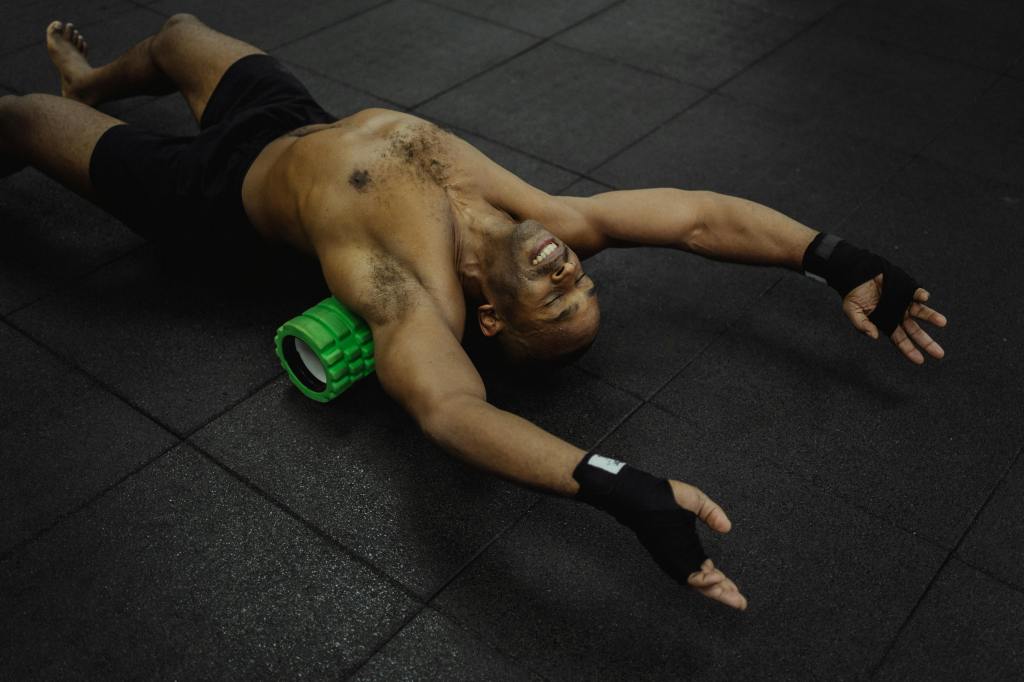
Foam Roller
Foam rolling can help reduce muscle soreness and increase range of motion. Spend time rolling each major muscle group, focusing on areas that feel particularly tight.
Massage Ball
A massage ball can target smaller areas and deep tissue, like the shoulders, feet, or glutes. Use it against a wall or on the floor to apply pressure to tight spots.
Compression Clothing
These garments can help reduce muscle fatigue during workouts and speed up recovery afterward. They work by enhancing circulation and reducing muscle oscillation. Wear them during workouts or even afterward for recovery benefits.
Incorporating these elements into your strength training routine can enhance performance, prevent injuries, and improve your overall training experience. Remember, consistency and proper technique, along with these tools and practices, are key to a successful strength training journey.
Educational Resources
Education is a crucial component of a successful strength training journey. The right resources can provide you with the knowledge to train effectively and safely.
Books
Look for books written by reputable fitness professionals. Titles focusing on anatomy, strength training fundamentals, and program design are beneficial. Some notable authors in the field include Rippetoe, Schoenfeld, and Contreras.
Videos
YouTube and other video platforms have a plethora of instructional videos. Channels run by certified fitness professionals or physical therapists often provide valuable tips on form and technique.
Online Courses
Websites like Coursera, Udemy, or even specific fitness-focused platforms offer courses ranging from beginner to advanced levels. These can be especially helpful for learning the science behind strength training, nutrition, and more.
Podcasts
Fitness and health podcasts can be a great way to gain insights while on the go.
Personal Trainer or Coach
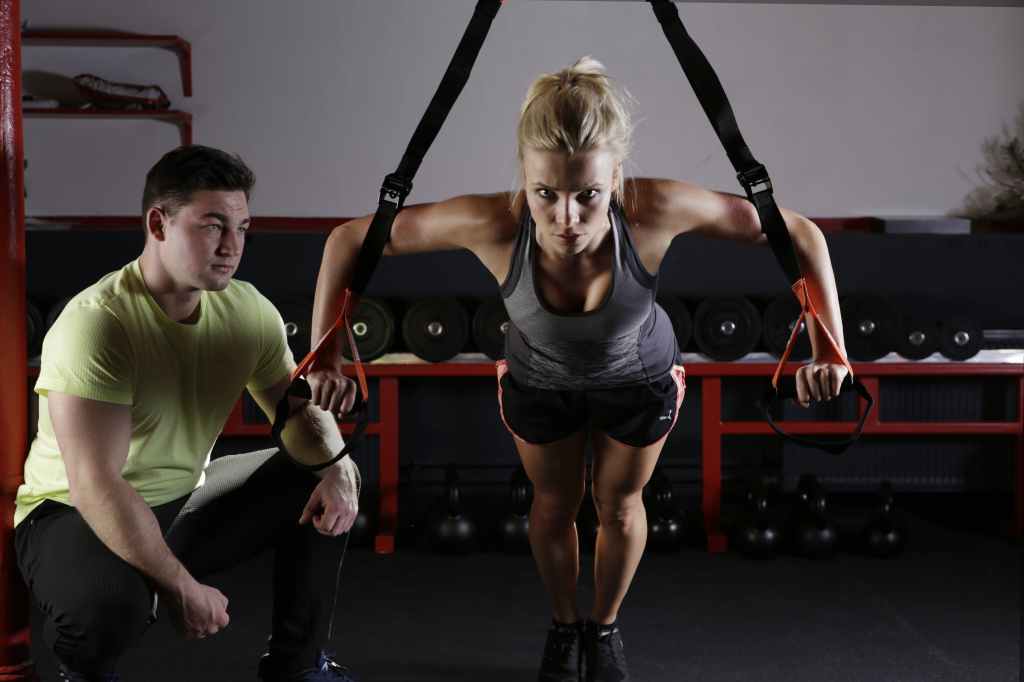
Personalized guidance from a certified trainer or coach can be invaluable, especially for beginners.
- Form Correction: A trainer can provide real-time feedback on your form, which is crucial for preventing injuries and ensuring you’re working the right muscles.
- Tailored Advice: They can tailor advice and modifications based on your unique strengths, weaknesses, and goals.
- Certification and Experience: When choosing a trainer, consider their certifications and experience, especially in relation to your specific goals.
Here’s some great strength training tips for beginners!
Progress Tracking
The whole point of strength training is to make progess, so you need a way to effectively and accurately measure that progress.
Workout Log or App
Tracking your workouts is essential for monitoring progress and planning future workouts.
- Workout Log: This can be as simple as a notebook or as sophisticated as a specialized app. Record the exercises, sets, reps, and weights used in each session.
- Apps: Many apps also allow you to track your progress over time with graphs and statistics, providing a visual representation of your improvements.
Measuring Tape and Scale
To track physical changes, a measuring tape and a scale are useful tools.
- Measuring Tape: Use it to measure various parts of your body (e.g., waist, hips, chest, arms, legs) every few weeks to track changes in muscle size.
- Scale: While useful, remember that it doesn’t distinguish between muscle and fat. Don’t rely solely on weight, as muscle is denser and weighs more than fat.
Motivation and Support
One of the most difficult things to do when you first start strength training is finding the motivation to stay consistent.
Workout Buddy or Community
Having a supportive community or a workout buddy can significantly enhance your training experience.
- Accountability: A workout partner can keep you accountable. Plan regular workouts together to maintain consistency.
- Online Communities: Join online forums, social media groups, or local clubs where you can share experiences, ask questions, and find support.
Setting Realistic and Measurable Goals
Goals give you direction and purpose in your training.
- SMART Goals: Goals should be Specific, Measurable, Achievable, Relevant, and Time-bound. For example, aiming to add 50 pounds to your deadlift in six months is a SMART goal.
- Short-term and Long-term Goals: Set both short-term (e.g., increasing the weight you lift each week) and long-term goals (e.g., competing in a powerlifting meet) to keep motivated.
Incorporating these elements into your strength training program can vastly enhance your understanding, keep you on track, and maintain your motivation. Remember, the journey to fitness is ongoing, and these tools can help you navigate it successfully.
Conclusion
In conclusion, embarking on a strength training journey is a rewarding endeavor that requires more than just determination; it demands a well-rounded approach encompassing various elements. From the initial fitness assessment to track your starting point, to carefully selecting the right equipment and clothing, every detail plays a significant role in your journey.
Crafting a workout plan tailored to your goals, understanding the importance of nutrition and hydration, and utilizing recovery tools are key steps towards achieving and maintaining your strength training objectives. Safety equipment is essential to protect yourself during workouts, while educational resources and professional guidance ensure that you’re training effectively and safely.
Tracking your progress keeps you motivated and helps in fine-tuning your regimen. Remember, the path to strength training success lies in a balanced, informed approach. With the right tools, knowledge, and mindset, you’re well-equipped to embark on this empowering journey towards better health and fitness.
 Exercise Addicts
Leave a reply to How to Does Protein Build Muscle for Weight Training? – Exercise Addicts Cancel reply