
In the pursuit of sculpting impressive biceps, dumbbell exercises stand out as a quintessential component for anyone aiming to build muscular arms. The article “Best Dumbbell Exercises for Biceps” explores the remarkable efficacy of dumbbell workouts in achieving this goal.
Dumbbells, with their unique versatility and accessibility, offer a myriad of benefits, making them an ideal tool for everyone – from fitness enthusiasts to professional bodybuilders. They provide the ability to target the biceps with pinpoint precision, engage stabilizing muscles for balanced development, and offer a range of motions that barbells simply cannot match.
Whether you’re working out at home or hitting the gym, dumbbell exercises cater to all environments and fitness levels. This article delves into a curated selection of the best dumbbell exercises that are specifically designed to stimulate and grow the biceps, ensuring that you can effectively work towards achieving those sought-after, powerful arms.
- What Are Your Biceps?
- Anatomy of the Biceps
- Function of the Biceps
- The Benefits of Using Dumbbells for Biceps Exercises
- Importance of Stronger Biceps
- The 13 Best Dumbbell Exercises for Biceps
- 1. Standing Dumbbell Curl
- 2. Hammer Curl
- 3. Concentration Curl
- 4. Incline Dumbbell Curl
- 5. Preacher Curl
- 6. Alternating Dumbbell Curl
- 7. Zottman Curl
- 8. Cross Body Hammer Curl
- 9. Wide-Angle Bicep Curl
- 10. Seated Alternating Curl
- 11. Decline Dumbbell Curl
- 12. Drag Curl
- 13. Reverse Grip Dumbbell Curl
- Dumbbell Exercises for Biceps – Final Thoughts

What Are Your Biceps?
The biceps muscles, formally known as the biceps brachii, are a key muscle group located in the upper arm. They are highly recognized due to their prominent display in the front of the upper arm and are often associated with strength and fitness. Understanding the anatomy and function of the biceps is crucial for effective training and injury prevention.
Anatomy of the Biceps
What some people may not know is that the biceps actually consist of two muscles, hence why there’s an “S” on the end of the word, because technically, it is plural.
The term “biceps” translates to “two heads” in Latin, referring to the muscle’s two separate heads – the long head and the short head.
Both heads originate from different points on the scapula (shoulder blade) and converge into a single muscle belly. The long head starts from the supraglenoid tubercle of the scapula, lying on the outside of the arm. The short head originates from the coracoid process of the scapula, situated more towards the inside of the arm.
Function of the Biceps
The biceps have three main functions that they serve, so what are these?
Elbow Flexion
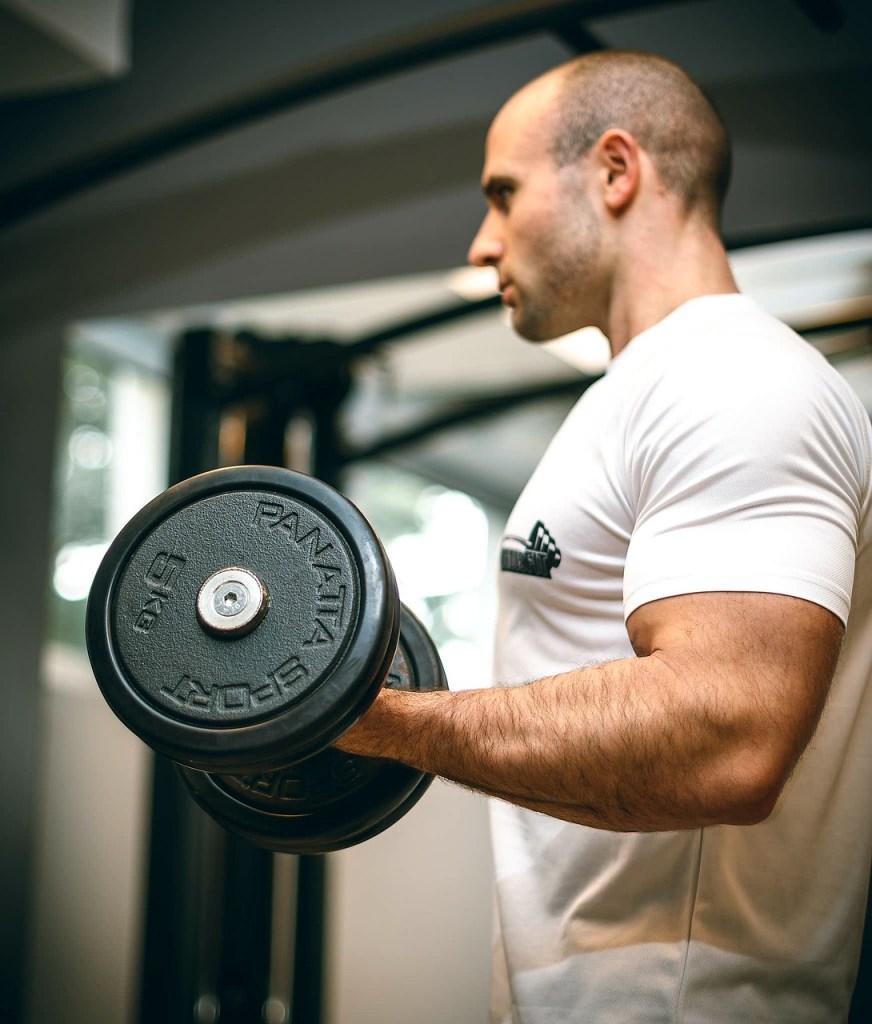
The primary function of the biceps is to flex the elbow, which is the action of bending the arm at the elbow joint, bringing the forearm towards the shoulder.
Forearm Supination
The biceps are also involved in supination of the forearm. This refers to the rotational movement where the palm is turned upwards (as in holding a soup bowl).
Shoulder Function
Additionally, the biceps play a role in the movement of the shoulder. The long head of the biceps assists in stabilizing the shoulder joint and is involved in shoulder flexion (raising the arm forward) and abduction (raising the arm sideways). Remember that protein is vital to build strong biceps!
The Benefits of Using Dumbbells for Biceps Exercises
Dumbbells, as a versatile piece of equipment, offer a plethora of benefits for biceps training that are hard to match with other types of weights or workout equipment.

Independent Arm Work
Dumbbell exercises allow for the individual training of each arm, promoting balanced strength and muscle development. This is particularly beneficial in addressing and correcting any muscle imbalances between the arms, ensuring that one side doesn’t dominate over the other. It allows each bicep to work independently, fostering symmetrical growth and strength.
Natural Range of Motion
The use of dumbbells in bicep exercises grants a greater range of motion compared to barbells or fixed machines. This freedom of movement is crucial for mimicking natural arm and wrist movements, thereby reducing the risk of strain or injury. It also enables more precise targeting of the bicep muscles, ensuring effective and focused workouts. If you want exercises with restricted ranges of motion, check out the Smith Machine.
Engagement of Stabilizing Muscles
Dumbbell exercises engage a wider range of stabilizing muscles. While targeting the biceps, these exercises simultaneously work on the surrounding muscles necessary for balance and control. This not only strengthens the biceps but also contributes to the overall stability, coordination, and strength of the arms. Build strong traps with these dumbbell exercises.
Versatility and Adaptability
Dumbbells offer an unmatched level of versatility and adaptability in strength training. They are available in various weights, accommodating all fitness levels. Their portability allows for their use in a variety of settings, from the gym to home, making it easier to maintain a consistent workout routine regardless of location.
Enhanced Muscle Contraction
The ability to rotate the wrists during dumbbell curls results in an enhanced contraction at the peak of the movement. This leads to more effective muscle growth and definition, as it allows for a more comprehensive engagement of the bicep muscle fibers.
Find out how to start strength training the right way!
Importance of Stronger Biceps
Before we talk about the best dumbbell exercises for biceps, let’s figure out how having stronger biceps will benefit you in your everyday life.
Upper Body Strength
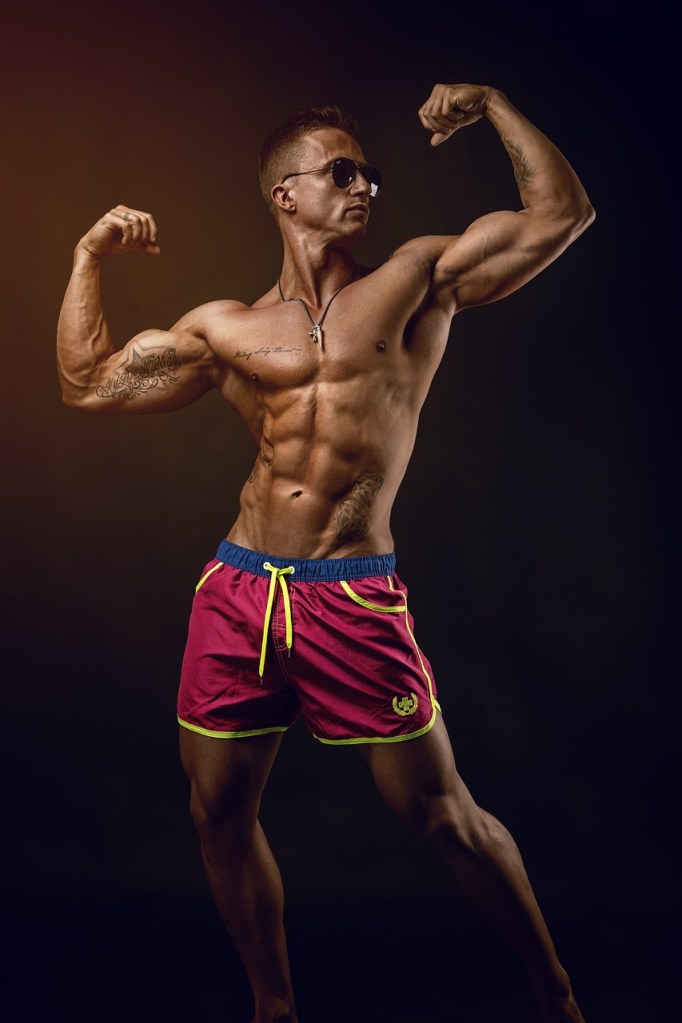
Strong biceps are crucial for enhancing overall upper body strength. They play a significant role in everyday activities that involve lifting, carrying, and pulling. This increased strength in the arms also contributes to better support and stability in shoulder movements.
Sports Performance
Well-developed biceps are beneficial in various sports that require arm strength and endurance. Strong biceps improve sports performance, offering better endurance, power, and efficiency in activities that involve throwing, swinging, or lifting. It’s certainly something to consider when creating a strength trainign plan.
Injury Prevention
Strengthening the biceps helps in supporting and stabilizing the elbow joint, which is pivotal in many arm movements. This can lead to a reduced risk of injuries, especially those related to overuse and strain in the arm muscles and tendons.
Overall, the use of dumbbells for bicep exercises offers a comprehensive approach to building arm strength, enhancing functional ability, and preventing injuries, making it an effective choice for individuals aiming to develop their arm muscles. Learn how to grow those triceps with dumbbells!
The 13 Best Dumbbell Exercises for Biceps
Let’s take a closer look at some of the best biceps exercises that you can do with dumbbells. Remember to always stretch first!
1. Standing Dumbbell Curl
- Targeted Biceps Part: Primarily works the biceps brachii, especially the long head, and also engages the brachialis and brachioradialis.
- Instructions:
- Stand with feet shoulder-width apart, a dumbbell in each hand, arms hanging by your sides, palms facing forward.
- Keep your elbows close to your torso, then curl the dumbbells towards your shoulders, contracting your biceps.
- Ensure your upper arms remain stationary, moving only your forearms.
- Slowly lower the dumbbells back to the starting position.
- Sets, Reps, and Rest: 3-4 sets of 8-12 reps each. Rest for 30-60 seconds between sets.
2. Hammer Curl
- Targeted Biceps Part: Targets the brachialis, which lies beneath the biceps brachii, and the brachioradialis of the forearm, contributing to arm thickness and forearm development.
- Instructions:
- Stand with feet shoulder-width apart, a dumbbell in each hand, arms at your sides, palms facing your body.
- Curl the weights up towards your shoulders, keeping your palms facing each other.
- Keep your upper arms stationary, moving only your forearms.
- Slowly lower the weights back to the starting position.
- Sets, Reps, and Rest: 3 sets of 10-15 reps each. Rest for 30-60 seconds between sets. Remember that rest is essential for bicep growth!
3. Concentration Curl
- Targeted Biceps Part: Isolates the biceps brachii, particularly the peak of the muscle.
- Instructions:
- Sit on a bench with your legs spread. Lean forward slightly.
- Hold a dumbbell in one hand and let it hang between your legs.
- Rest the back of your upper arm on your inner thigh.
- Curl the dumbbell towards your shoulder, focusing on the bicep contraction.
- Slowly lower it back down.
- Repeat on the other side.
- Sets, Reps, and Rest: 3 sets of 8-12 reps on each arm. Rest for 30-60 seconds between sets.
4. Incline Dumbbell Curl
- Targeted Biceps Part: Emphasizes the long head of the biceps, enhancing the bicep peak, and stretches the muscle under load.
- Instructions:
- Lie back on an incline bench set at 45-60 degrees.
- With a dumbbell in each hand, let your arms hang straight down, palms facing forward.
- Curl the weights towards your shoulders, squeezing your biceps at the top.
- Slowly lower them back down.
- Sets, Reps, and Rest: 3-4 sets of 8-10 reps each. Rest for 45-60 seconds between sets.
5. Preacher Curl
- Targeted Biceps Part: Isolates the biceps brachii, minimizing involvement from other muscles.
- Instructions:
- Sit at a preacher bench with your upper arms resting against the pad.
- Hold a dumbbell in each hand with palms facing up.
- Curl the weights towards your shoulders, keeping your upper arms in contact with the pad.
- Slowly lower the weights back down.
- Sets, Reps, and Rest: 3 sets of 10-12 reps each. Rest for 45-60 seconds between sets.
6. Alternating Dumbbell Curl
- Targeted Biceps Part: Works both heads of the biceps brachii, with a focus on each arm individually, aiding in correcting muscle imbalances.
- Instructions:
- Stand with feet shoulder-width apart, holding a dumbbell in each hand at arm’s length, palms facing forward.
- Curl one dumbbell towards your shoulder, contracting the bicep.
- Keep your upper arm stationary; only your forearm should move.
- Lower the dumbbell back to the starting position and repeat with the other arm.
- Alternate arms with each rep.
- Sets, Reps, and Rest: 3 sets of 10-12 reps per arm. Rest for 30-60 seconds between sets.
7. Zottman Curl
- Targeted Biceps Part: Primarily targets the biceps brachii and also works the forearm muscles.
- Instructions:
- Stand with feet shoulder-width apart, holding a dumbbell in each hand, arms hanging by your sides, palms facing forward.
- Curl the dumbbells up towards your shoulders.
- At the top of the curl, rotate your wrists so your palms face downwards.
- Lower the dumbbells with this grip.
- At the bottom, rotate your wrists back to the starting position.
- Sets, Reps, and Rest: 3 sets of 8-10 reps each. Rest for 45-60 seconds between sets.
8. Cross Body Hammer Curl
- Targeted Biceps Part: Targets the outer part of the bicep and the brachialis.
- Instructions:
- Stand with feet shoulder-width apart, holding a dumbbell in each hand at your sides, palms facing your body.
- Curl one dumbbell diagonally across your body towards the opposite shoulder.
- Keep your palm facing inward throughout the movement.
- Slowly lower the weight back down and repeat with the other arm.
- Sets, Reps, and Rest: 3 sets of 10-12 reps per arm. Rest for 30-60 seconds between sets.
Learn how to scultp your core with kettlebell exercises.
9. Wide-Angle Bicep Curl
- Targeted Biceps Part: Primarily targets the short head of the biceps.
- Instructions:
- Stand with feet shoulder-width apart, extending your arms out to the sides at shoulder level, palms facing up, holding a dumbbell in each hand.
- Curl the weights towards your head, keeping your arms extended out to the sides.
- Slowly lower the weights back to the starting position.
- Sets, Reps, and Rest: 3 sets of 8-12 reps each. Rest for 45-60 seconds between sets.
10. Seated Alternating Curl
- Targeted Biceps Part: Works the biceps brachii, with a focus on each arm individually.
- Instructions:
- Sit on a bench with a dumbbell in each hand, arms hanging down at your sides, palms facing forward.
- Curl one dumbbell towards your shoulder, contracting the bicep.
- Keep your upper arm stationary; only your forearm should move.
- Lower the dumbbell back to the starting position and repeat with the other arm.
- Alternate arms with each rep.
- Sets, Reps, and Rest: 3 sets of 10-15 reps per arm. Rest for 30-60 seconds between sets.
Start tracking your strength training progress!
11. Decline Dumbbell Curl
- Targeted Biceps Part: Primarily targets the lower part of the biceps brachii, providing a unique angle for muscle activation.
- Instructions:
- Lie face-up on a decline bench, securing your legs at the end.
- Hold a dumbbell in each hand, arms extended downwards, palms facing forward.
- Curl the weights towards your shoulders, contracting your biceps.
- Keep your upper arms stationary; only move your forearms.
- Slowly lower the dumbbells back to the starting position.
- Sets, Reps, and Rest: 3-4 sets of 8-12 reps each. Rest for 45-60 seconds between sets.
12. Drag Curl
- Targeted Biceps Part: Intensely targets the entire biceps brachii, with a focus on the long head.
- Instructions:
- Stand with feet shoulder-width apart, holding dumbbells with arms hanging in front of you, palms facing forward.
- Keep your elbows back and drag the weights up along your torso.
- Your elbows should move back as you curl the dumbbells towards your shoulders.
- Lower the weights back down, maintaining contact with your body.
- Sets, Reps, and Rest: 3 sets of 8-10 reps each. Rest for 30-60 seconds between sets.
13. Reverse Grip Dumbbell Curl
- Targeted Biceps Part: Works the biceps brachii and significantly engages the forearms, particularly the brachioradialis muscle. A great exercise for any strength training plan!
- Instructions:
- Stand with feet shoulder-width apart, holding dumbbells at your sides, palms facing down (overhand grip).
- Curl the weights up towards your shoulders, keeping your elbows close to your torso.
- Focus on contracting the biceps and forearms.
- Slowly lower the dumbbells back to the starting position.
- Sets, Reps, and Rest: 3-4 sets of 8-12 reps each. Rest for 30-60 seconds between sets.
Dumbbell Exercises for Biceps – Final Thoughts
As we conclude our journey through the “Best Dumbbell Exercises for Biceps,” it’s clear that incorporating dumbbells into your arm workouts can significantly enhance your biceps’ growth and overall arm aesthetics.
Dumbbells offer a level of versatility and range of motion that is unmatched, allowing for more natural and varied movements compared to other equipment. This adaptability not only aids in sculpting bigger biceps but also ensures a more comprehensive and balanced muscle development.
Maybe you’d like to use a smith machine instead.
By following the exercises outlined in this article, individuals of all fitness levels can embark on an effective path toward building stronger, larger biceps.
Whether you’re a beginner taking the first steps in your fitness journey or an experienced lifter looking to refine your arm workouts, dumbbell exercises for biceps are an indispensable tool in your fitness arsenal. Embrace these workouts, and you’ll be well on your way to achieving those impressive, muscular biceps that are a hallmark of strength and dedication.
 Exercise Addicts
Leave a reply to How to Create a Strength Training Plan – Exercise Addicts Cancel reply