
Something that everyone will learn at some point, whether the hard way or the easy way, is that stretching before exercising and lifting weights is a must. Today, we want to look at some of the best shoulder stretches for weightlifting.
Some of the best stretches for your shoulders include the cross-body shoulder stretch, the pendulum stretch, the doorway stretch, the neck release stretch, shoulder shrugs, the child’s pose stretch, and several others.
Keep reading to find out how to loosen up those shoulders so they’re nice and warmed up for a serios session of lifting heavy weights!
- The Importance of Stretching the Shoulders Before Lifting Weights
- 1. Cross-Body Shoulder Stretch
- 2. Pendulum Stretch
- 3. Doorway Stretch
- 4. Neck Release Stretch
- 5. Shoulder Shrugs
- 6. Child’s Pose Stretch
- 7. Cat-Cow Stretch
- 8. Eagle Arms Stretch
- The Best Shoulder Stretches – Final Thoughts
The Importance of Stretching the Shoulders Before Lifting Weights
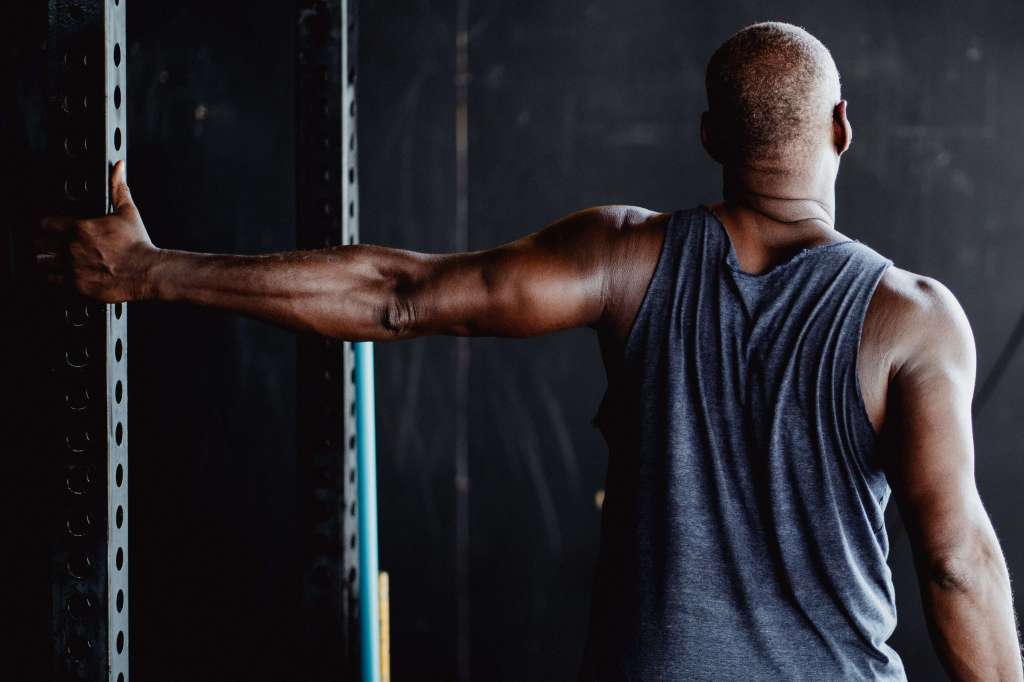
Stretching before weight lifting, especially when it comes to the shoulders, is a crucial aspect of any fitness routine for several reasons. The shoulders are a highly complex joint with a wide range of motion, making them particularly susceptible to injury if not properly warmed up and stretched. Here’s a detailed explanation of why stretching before lifting weights is important for the shoulders.
1. Increases Blood Flow and Muscle Temperature
Stretching before lifting weights helps to increase the blood flow to the muscles, including those around the shoulder joint. This increase in blood flow raises the muscle temperature, which enhances the elasticity and flexibility of the muscles. Warmer muscles are more pliable and less prone to strains and injuries, which is particularly important for the shoulders due to their extensive involvement in lifting movements.
2. Improves Range of Motion
The shoulders are involved in a wide variety of movements during weight lifting, from overhead presses to lateral raises. Stretching before engaging in these activities can significantly improve the range of motion in the shoulder joint. An improved range of motion allows for a more effective and efficient lift, enabling the lifter to perform exercises through their full range, which can contribute to better muscle growth and strength gains.
3. Reduces the Risk of Injury
Shoulder injuries are among the most common injuries in weight lifting. Stretching the muscles and tendons around the shoulder joint before lifting weights can help to reduce the risk of strains, tears, and other injuries. By preparing the muscles for the upcoming exertion, stretching helps to prevent the overextension or overrotation of the shoulder joint, which are common causes of acute injuries.
4. Prepares the Mind for Exercise
Stretching is not only beneficial for the body but also for the mind. It provides a moment to focus on the workout ahead, setting the stage for a productive session. For the shoulders, this mental preparation is crucial, as it helps the lifter to concentrate on proper form and technique, which are essential for preventing injuries and maximizing the effectiveness of the workout.
5. Promotes Flexibility and Posture
Regular stretching can lead to long-term improvements in flexibility and posture. These benefits are particularly important for the shoulders, as flexibility can help to mitigate the effects of muscle imbalances and poor posture that often result from daily activities such as sitting at a desk. A more flexible shoulder joint is less likely to be injured and more capable of performing a wide range of weight lifting exercises correctly.
6. Facilitates Muscle Recovery and Growth
While the primary purpose of pre-exercise stretching is to prepare the body for activity, it also has benefits for muscle recovery and growth. By enhancing circulation and flexibility, stretching can contribute to a more effective recovery process, reducing muscle soreness and tightness after a workout. This is important for the shoulders, where tightness and discomfort can quickly lead to decreased performance and an increased risk of injury. Of course, not just your shoulders need stretching!
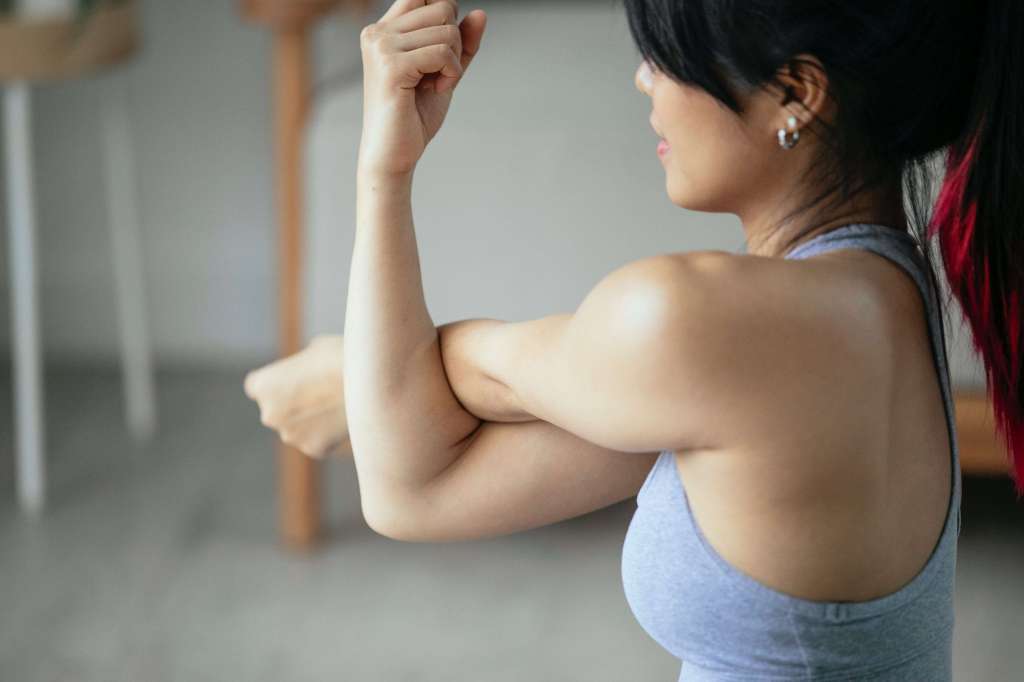
1. Cross-Body Shoulder Stretch
This simple yet effective stretch targets the posterior deltoid muscles. It’s ideal for those who experience tightness from repetitive activities like throwing or typing.
Target: Posterior Deltoid
Importance
The cross-body shoulder stretch is crucial for loosening the posterior aspect of the shoulder, promoting better posture and reducing the risk of shoulder impingements. It enhances flexibility, allowing for a greater range of motion which is essential for overhead activities and sports. Regular stretching can alleviate chronic shoulder stiffness and pain, making daily activities more comfortable.
Instructions:
- Bring one arm across your body at about chest height.
- Use your other hand to apply gentle pressure to the arm, pulling it closer to your chest.
- Hold the stretch for 20-30 seconds, then switch arms.
2. Pendulum Stretch
The pendulum stretch is a gentle way to increase mobility in the shoulder joint, particularly beneficial for individuals recovering from rotator cuff injuries.
Target: Rotator Cuff
Importance
By encouraging movement through a natural, gravity-assisted motion, the pendulum stretch helps maintain joint flexibility without straining the muscles. It’s particularly important for the rehabilitation process, aiding in the recovery of shoulder injuries by promoting circulation and reducing inflammation in the joint. This stretch can accelerate the healing process and prevent the onset of stiffness.
Instructions:
- Lean forward, placing one hand on a table for support.
- Let your other arm hang freely and swing it gently in circles.
- Perform clockwise and anticlockwise motions for about 30 seconds each.
3. Doorway Stretch
The doorway stretch effectively opens up the chest and shoulders, targeting the pectoralis major and minor muscles. It’s particularly beneficial for people who spend a lot of time sitting or working at a computer.
Target: Pectoralis Major and Minor
Importance
Regularly performing the doorway stretch can counteract the forward shoulder roll that often comes from prolonged desk work or smartphone use, reducing the risk of developing rounded shoulders and improving overall posture. This stretch enhances thoracic mobility, making breathing easier and reducing tension headaches caused by tight chest muscles.
Instructions:
- Stand in a doorway, lifting your arm so it’s parallel to the floor and bent at the elbow.
- Place your palm on the door frame and step forward with one foot, leaning into the stretch.
- Hold for 20-30 seconds, then switch arms.
4. Neck Release Stretch
This gentle stretch targets the lateral and posterior aspects of the deltoid and the trapezius muscles, addressing the neck and shoulder simultaneously.
Target: Lateral and Posterior Deltoid, Trapezius
Importance
The neck release stretch is vital for alleviating tension that accumulates from stress, poor posture, or long periods of sitting. It helps to prevent neck pain and headaches, promotes relaxation, and can improve the range of motion in the neck and shoulders. This stretch is especially beneficial for individuals who experience neck stiffness and shoulder pain, offering a quick and easy way to relax these areas.
Instructions:
- Sit or stand with a straight spine.
- Slowly tilt your head to one side, bringing your ear towards the shoulder until a stretch is felt.
- Hold for 20-30 seconds, then switch sides.
5. Shoulder Shrugs
Shoulder shrugs are a simple exercise targeting the trapezius and rhomboid muscles in the upper back and shoulders.
Target: Trapezius and Rhomboids
Importance
Regularly performing shoulder shrugs can help relieve tension and strengthen the muscles that support the shoulder blades. This is crucial for maintaining a healthy posture and preventing shoulder and neck pain. Additionally, strengthening these muscles can improve the stability of the shoulder joints, which is beneficial for both daily activities and athletic performance.
Instructions:
- Raise both shoulders up towards your ears as high as possible.
- Hold for 3-5 seconds, then relax.
- Repeat for 10-15 repetitions.
6. Child’s Pose Stretch
Originating from yoga, the Child’s Pose stretch targets the shoulders, back, and hips, providing a gentle stretch that encompasses multiple areas.
Target: Deltoids, Latissimus Dorsi, Scapular Stabilizers
Importance
This stretch is essential for releasing tension in the back and shoulders, promoting relaxation and stress relief. It’s particularly beneficial for individuals who experience lower back pain or tightness in the shoulders, as it helps to elongate the spine and relax the shoulder blades. The Child’s Pose can also aid in improving circulation to the spine and shoulders, enhancing flexibility and mobility.
Instructions:
- Start on your hands and knees, then sit back on your heels, stretching your arms forward on the ground.
- Lower your forehead to the floor, keeping your arms extended.
- Hold for 20-30 seconds, feeling the stretch through your shoulders and back.
7. Cat-Cow Stretch
The Cat-Cow stretch is a dynamic exercise that improves flexibility and circulation in the spine and shoulders, involving the entire shoulder girdle and promoting spinal health.
Target: Entire Shoulder Girdle
Importance
This stretch is crucial for anyone looking to improve posture and spinal flexibility. By alternating between flexion and extension, the Cat-Cow stretch helps to lubricate the spinal joints and stretch the back and shoulder muscles. Regular practice can reduce back pain, improve digestion, and increase overall mobility, making it a vital exercise for maintaining a healthy spine.
Instructions:
- Begin on your hands and knees in a tabletop position.
- Arch your back up, tucking your chin to your chest (Cat).
- Then, sink your back down, lifting your head and tailbone up (Cow).
- Alternate between Cat and Cow for 10-15 repetitions.
8. Eagle Arms Stretch
Eagle Arms stretch targets the deltoids, trapezius, and scapular muscles, offering a deep stretch that is both challenging and rewarding.
Target: Deltoids, Trapezius, Scapular Muscles
Importance
This stretch is key for relieving tightness across the upper back and shoulders, especially for those who carry tension in these areas. By promoting flexibility in the shoulders and improving scapular mobility, the Eagle Arms stretch can help prevent upper back pain and improve posture. It’s particularly beneficial for individuals who perform repetitive upper body movements, offering relief from tightness and enhancing shoulder flexibility.
Instructions
- Extend your arms straight in front of you.
- Cross one arm over the other, bending at the elbows to twist the arms together, palms touching if possible.
- Lift your elbows while dropping your shoulders down.
- Hold for 20-30 seconds, then switch arms.
The Best Shoulder Stretches – Final Thoughts
The importance of stretching the shoulder muscles before engaging in weight lifting cannot be overstated. The shoulders, being one of the most versatile and complex joints in the body, are crucial for a vast array of movements in weight training.
Properly stretching these muscles prepares them for the demands of lifting, significantly enhancing performance, range of motion, and safety. Through increased blood flow and muscle temperature, improved flexibility, reduced risk of injury, and enhanced mental readiness, stretching provides a foundation for a more effective and efficient workout.
 Exercise Addicts
Leave a comment